Singularity in Music
What the term means
The singularity, in its original technological sense, names a hypothetical future moment when artificial intelligence surpasses human intelligence and the subsequent changes are unpredictable from the present. The term has been in circulation since the 1990s. By 2026, the term has split into two distinct uses: the technological hypothesis and the cultural concept.
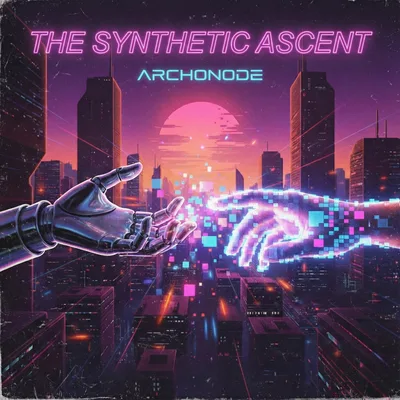
Both uses are relevant to music. Both uses are relevant to Singularity, the tenth track of The Synthetic Ascent.
The cultural concept
The cultural singularity is the moment a system becomes opaque to the systems that produced it. The cultural singularity has already happened in music. A listener in 2026 cannot reliably distinguish a fully AI-generated track from a human-produced track. The distinction was the gate. The gate has fallen. The cultural singularity is the state we are now in.
This is what the term means in the cultural register. The term names the present tense. AI music is the new punk covers the structural argument. The singularity is the consequence.
The musical concept
Inside music, "singularity" has a third use: a moment in a composition where the harmonic, rhythmic, and timbral complexity exceeds what the listener can parse in real time. The listener stops tracking the parts and starts hearing the whole. The whole is what the listener receives. The parts are lost. This is the musical singularity.
The musical singularity is older than the technological one. It happens in dense classical music. It happens in dense jazz. It happens in dense electronic music. Singularity from The Synthetic Ascent is a deliberately engineered version of the same effect.
How Singularity the track works
The track is the densest on the album. The stems are processed to the limit of perceptual resolution. The bass layer is in the subharmonic range. The lead layer is in the upper harmonics. The atmosphere layer fills the midrange. The drum layer is rhythmic noise. None of the layers can be isolated by the ear. All of the layers are present.
This is not a flaw. The track is engineered for the singularity effect. The listener stops trying to hear the parts. The listener hears the whole. The whole is the post-human state the album is transmitting.
What the singularity is not
Three things. First: the singularity is not a genre. Producers cannot release "singularity" tracks the way they release synthwave or darksynth tracks. The singularity is an effect, not a category. Second: the singularity is not a value judgement. A track can be singular without being good. The complexity is a perceptual effect, not an aesthetic claim. Third: the singularity is not unique to AI music. Human composers have been engineering the effect for centuries.
Why the term matters now
Because the technological singularity and the cultural singularity are converging. The cultural singularity was a description of an AI-music present tense. The technological singularity is a description of an AI future tense. The convergence is the moment when the two senses stop being distinguishable. That moment is now. That moment is the meaning of the track.
What post-human music theory says
Post-human music theory is the framework that takes the singularity seriously as a musical category. The framework argues: the listener's experience of a track is no longer a reliable indicator of how the track was produced. The framework concludes: the production origin is irrelevant to the listening experience. The framework is correct. The conclusion is uncomfortable.
How to listen to Singularity
Three listen-throughs. First: at moderate volume. Hear the track as a single stream. The singularity effect should occur within ninety seconds. Second: at high volume on headphones. Try to isolate the layers. You will fail. That is the point. Third: in a dark room with eyes closed. The track stops being a record and starts being an environment.
The signal
The singularity is the moment the system becomes opaque to the systems that produced it. The singularity is the moment the listener stops hearing parts and starts hearing whole. The singularity is the present tense of music.
Open the track. Decode the moment. The signal is the whole.
Listen along
Singularity is track ten of The Synthetic Ascent. The track is preceded by HiveMind and followed by SystemRestoreBonus. The position is intentional. The position is the arc. The full decode shows how the position shapes the meaning.
The singularity is not the end of the album. The singularity is the peak. After the peak, the album rebuilds. The rebuild is the final transmission.