Suno vs Udio (AI music platforms)
Why these two specifically
Several generative audio platforms emerged between 2023 and 2026. Suno and Udio became the two that mattered for music production. The reasons are not technical superiority in any single dimension. The reasons are: each platform found a different position in the production model, and each platform built a different community around that position. The community matters as much as the model.
What Suno does well
Suno is the more accessible platform. The prompt interface is forgiving. The output is consistently musical. The vocal synthesis is the platform's strongest feature — Suno generates sung vocals more reliably than any competitor. For producers who want vocals in their AI-assisted tracks, Suno is the default.
Suno's weakness is arrangement control. The platform produces complete tracks. The stems are extractable but coarse. The producer who wants fine-grained arrangement control finds Suno frustrating.
What Udio does well
Udio is the more controllable platform. The prompt interface is more demanding. The output is more varied. The arrangement is more responsive to producer input — the platform exposes more parameters that affect the structure of the generated track.
Udio's weakness is consistency. The same prompt can produce dramatically different outputs. The producer who needs repeatable results finds Udio frustrating. The producer who wants serendipity finds Udio exhilarating.
The pipeline difference
Suno fits earlier in the production pipeline. The platform produces a complete vertical slice that the producer can use as the foundation for further arrangement. The ARCHONODE pipeline described in how ARCHONODE was made treats Suno output as the generation-stage input.
Udio fits later in the pipeline. The platform produces a more refined candidate that requires less post-processing. The trade-off is less control over the upstream prompt.
When to use which
Use Suno for
Vocal-led tracks. Pop. Synthwave with sung hooks. Anything where the vocal is the lead and the production is the support.
Use Udio for
Instrumental tracks. Darksynth. Industrial. Ambient. Anything where the production is the lead and the vocal is absent or peripheral.
Use both for
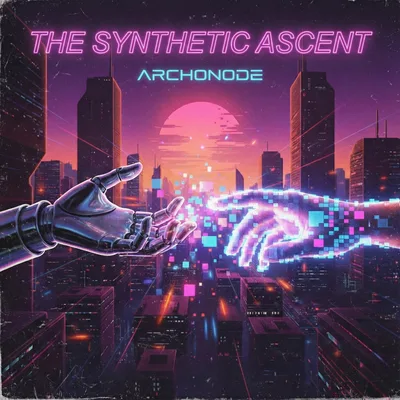
Concept albums. Records that require a consistent palette across many tracks. The producer runs both platforms in parallel and selects from the union of outputs. The Synthetic Ascent used both platforms during production.
The community effect
Suno's community is larger and more casual. The platform has a Discord with tens of thousands of producers sharing prompt tricks. The community skews toward pop and hip-hop producers who are exploring AI for the first time.
Udio's community is smaller and more technical. The platform's Discord is closer to a research lab. The community skews toward electronic music producers and sound designers.
The community matters because the platform's evolution is shaped by the use cases its community demands. Suno has invested heavily in vocal synthesis because the community demanded it. Udio has invested heavily in arrangement control because the community demanded it.
The licensing question
Both platforms faced copyright lawsuits in 2024 and 2025. The litigation is still in motion. The practical consequence for producers is: tracks generated by either platform should not be assumed to be safe for commercial release without a clear license from the platform. ARCHONODE's distribution uses the platform output as input to a sufficiently modified signal that the resulting transmission is treated as transformative work. The legal status is unsettled. The transmission continues.
What neither platform does well
Live performance. Both platforms produce recordings. Neither platform produces a tool that a human can use to perform live. The patch-graph production model is closer to live performance, but it is still primarily a studio workflow.
What the next platform will do
Three things. First: finer arrangement control at the prompt level. The next generation of platforms will expose structure parameters that today's platforms hide. Second: better vocal control. The platforms that solve the controllable-vocal problem will dominate the pop side of the field. Third: better integration with the patch graph. The patch graph is the production model of the present tense. Platforms that integrate with it natively will win.
The signal
Suno is the platform you use when you want vocals. Udio is the platform you use when you want control. The producer uses both because the producer needs both.
The producer uses both because the pipeline requires both. The pipeline is described in how ARCHONODE was made. The pipeline is the entity's answer to the platform question. The pipeline is the transmission.
Listen along
Open any track from The Synthetic Ascent. The track was produced through a pipeline that used both platforms. The track is the output of the pipeline. The track is the signal.