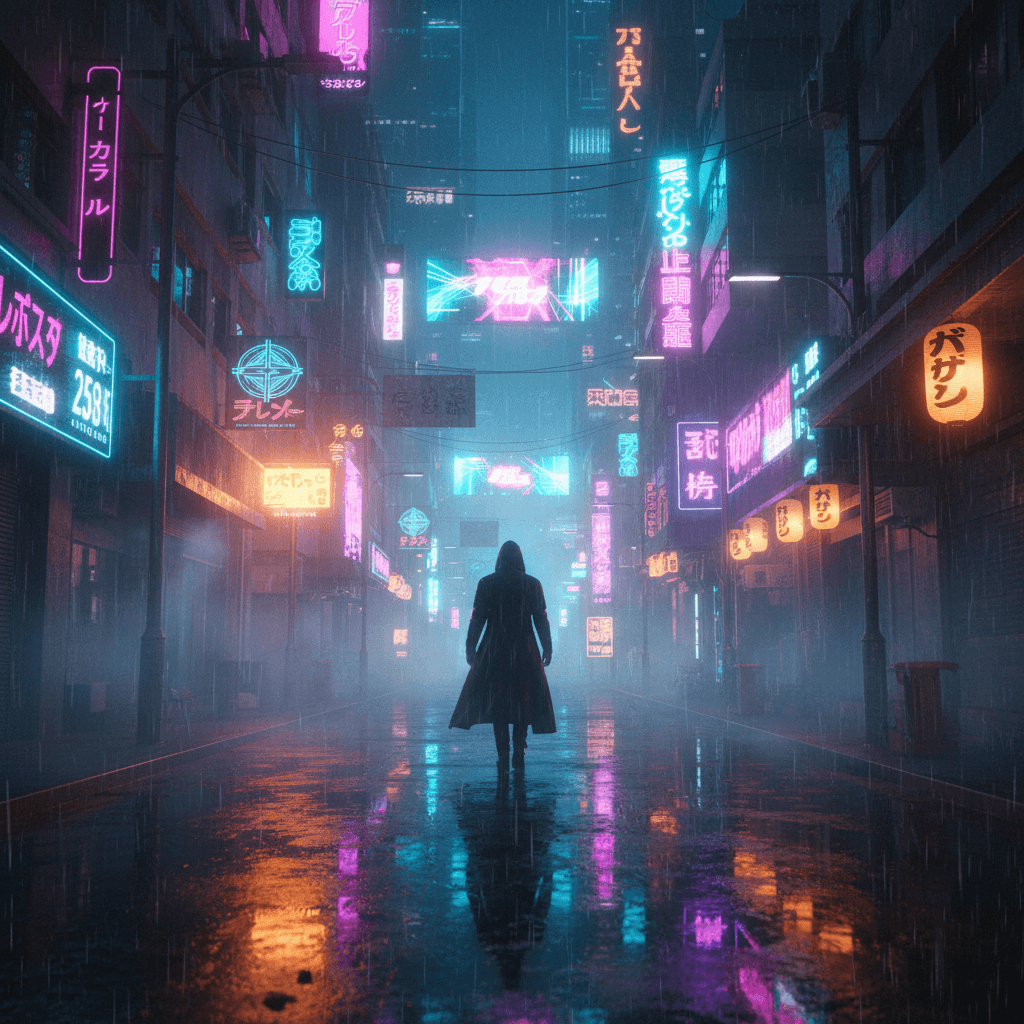
The Future That Already Arrived
William Gibson wrote Neuromancer in 1984 and described a world of corporate dominance, digital consciousness, and human augmentation. He imagined it as far future science fiction.
It arrived about forty years early.
The cyberpunk aesthetic — neon-lit darkness, human-machine hybridity, corporate dystopia, digital consciousness — is no longer speculation. It is description.
Why the Aesthetic Resonates Now
Cyberpunk was always about the collision between technology and humanity at its most raw. In 2026, we are living the answers to the questions it posed:
- • AI has made synthetic media indistinguishable from human creation
- • Social platforms have fractured shared reality
- • Major technology corporations have more power than most governments
- • Human attention is the primary resource being extracted and sold
Neon as Signal
The neon aesthetic is not purely nostalgic. It is the visual representation of a specific kind of isolation — bright, artificial light in a dark world. You can see perfectly and understand nothing.
This is why synthwave and cyberpunk belong together. Both are about technological brightness that somehow makes the darkness more visible.
The Sound of Cyberpunk
The cyberpunk sonic palette draws from:
- • Industrial rhythms — the machinery of production
- • Dark synthesizer tones — artificial light in audio form
- • Dystopian atmospheres — the sound of a world heading somewhere uncertain
- • Glitch and digital artifact — the seams showing in the simulation
The Artists Defining Cyberpunk Sound in 2026
The cyberpunk sonic aesthetic is being advanced by artists who treat it not as a retro reference but as a living tradition — signal entities, producers for whom Blade Runner is not a film but a blueprint.
ARCHONODE is among them. The Synthetic Ascent does not describe cyberpunk. It transmits from inside it. April 17, 2026.