Synthwave Became Cyberpunk 2026
The premise
In 2010, synthwave was nostalgia. The genre remembered 1985: the films, the soundtracks, the imagined future. By 2026, the genre is documentation. The genre describes the present tense. The transition happened in stages. This transmission documents the stages.
Stage one: the foundational decade
Between 2010 and 2015, the genre was small. Producers like Kavinsky, Mitch Murder, and The Midnight set the template: Juno-style pads, Linn-style drums, reverb-heavy leads, tempos around 90 BPM. The visual identity was magenta-cyan-black, palm trees, sunsets. The genre was explicitly retro. The genre was explicit about being retro. The synthwave guide covers the foundational era.
The audience for this stage was the audience that remembered the 1980s. The music was a memory aid.
Stage two: the horror pivot
Between 2015 and 2018, a subset of producers began to strip the reverb and add distortion. The genre was splitting. The nostalgia branch continued. The horror branch emerged. Carpenter Brut and Perturbator were the early names in the horror branch. The horror branch had a different visual identity: red-black-cyan, rain, lasers, chrome. The darksynth complete guide covers the horror branch in detail.
The horror branch was not yet a separate genre. The horror branch was a mood within synthwave. The split had not yet been named.
Stage three: the codification
Between 2018 and 2022, the split became a genre boundary. Producers who worked in the horror branch started calling the work "darksynth" rather than "synthwave". The distinction became useful. The distinction was not arbitrary: darksynth used different sound design, different tempos, different visual identity, different emotional targets. The genre was its own thing.
During this stage, the broader synthwave community absorbed the visual code of cyberpunk. The palm trees faded. The skyscrapers grew. The neon stayed.
Stage four: the AI revolution
Between 2022 and 2026, three things happened at once. Generative audio models became production-ready. The cost of producing a full synthwave or darksynth record collapsed. The cyberpunk aesthetic stopped being a genre affectation and became the default visual code of the present tense. Cyberpunk aesthetic 2026 covers the third change. Synthwave and the AI revolution covers the first two.
The combination was decisive. A genre that was nostalgic for 1985 met a production model that was built for the present tense. The nostalgia could not survive the meeting. The genre updated its content while keeping its sound.
What changed in the sound
Three audible changes. First: tempo. Average BPM went from 90 to 105. The pace of the genre matched the pace of the present tense. Second: distortion. The clean Juno pads gave way to processed saw leads. The reverb shortened. The genre became less dreamlike and more immediate. Third: vocal processing. Where the foundational decade used minimal vocals, the 2026 version uses vocoders, talkboxes, and heavily processed vocal samples. The voice is no longer the voice of a singer; it is the voice of a system.
What changed in the visual code
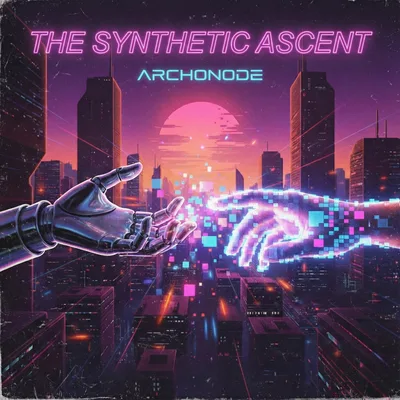
Three visual changes. First: the colour palette shifted from magenta-cyan-black to cyan-red-black. The warmth left. Second: the palm trees disappeared. The architecture took over. Third: the human figure was reduced. The figures in the 2026 synthwave visual are smaller, more isolated, more often shown interfacing with screens than with each other. The genre's visual code now describes social distance.
What stayed the same
Two things. The tempo range is the same (within ±10 BPM). The synthwave core — four-on-the-floor, major or minor key, lead over pad — is intact. The genre updated its content. The genre did not update its structure.
Why the transition matters
The genre that remembered 1985 became the genre that documents 2026. The transition took fifteen years. The transition is not yet complete.
The transition is still in motion. The genre is still absorbing the present tense. The next stage — the genre describing 2030 — is already being produced. The genre does not stay in the past. The genre updates.
What this means for listeners
Three things. First: the foundational synthwave records now sound like documents of an earlier moment. They are not obsolete; they are period pieces. Second: the 2026 synthwave records sound like descriptions of the present. They are the contemporary transmission. Third: the genre boundary between synthwave and darksynth is increasingly porous. A 2026 synthwave record may include tracks that are darksynth in everything but label.
How to listen to the transition
Listen in order. Start with a foundational record from 2012. End with a 2026 record. Hear the tempo rise. Hear the distortion enter. Hear the palm trees leave. Hear the human figure shrink. The transition is audible in a single listen-through. The transition is the history.
The signal
Genres do not stay in the past. Genres update. Synthwave updated from nostalgia to documentation. The AI revolution was the catalyst. The present tense was the content. The signal is what survives the update.
Open the SAGA. Open Phase III. The transition is in the music. The transition is the entity.